Prayer: An honest accounting.
Fair warning this church talk was the most honest testimony I could give about prayer and my experiences with prayer. My motivation was to speak to people like me about how to be better at prayer.*
-----------------------------------------
 I was talking to a friend about a mutual friend and about how we both hadn't called her in a while to see how she was doing. He justified in saying that he felt bad when he didn't call her in a while, and so even though he knew he should, he felt guilty so he didn't. So then, if something big came up that he wanted to call and tell her about it, he still wouldn't because then it would seem like he only called her for big events, which seemed kind of shallow, so it was a cycle that seemed hard to break once he'd gotten in it.
I sympathized and said that that was how I felt too, and also, how I often feel about prayer.
Almost all of our lives we are taught and told to pray and how to do so. It's easy to take it for granted that this a thing we know how to do and automatically add into our lives.
I am here to tell you, that prayer, and praying, is hard. I will spend all of my life trying to master it.
There are many reasons why prayer is hard such as not understanding the reasons to pray, feeling like prayer is only an obligation, or feeling guilty for not praying. There are reasons why praying is hard such as feeling like you are not praying the right way or for the right things, or not finding enough time, or feeling disconnected from God, or simply feeling sleepy.
Today, I'd like to tell you three things that have become helpful to me as I pray, and how I've increased my understanding of prayer and eventually my ability to pray.
First, in the story about my friend, I eventually called to say hello. Happily, we picked up where we had left off and caught up on lives and events. We've been friends since we were kids and there is a bond of love, friendship and shared history that can be drawn upon after long periods of no contact.
 Heavenly Father has that kind of relationship with us, except that it is times 100 and his love for us is perfect.
Prayer is a means of expressing our love to God. Prayer is for me. God doesn't need me to pray to him. I need me to pray to him. When we learn to pray, we sometimes forget that at the core of prayer is to practice remembering God. (1) I love this idea that prayer is practice. When we pray, our minds wander and sometimes it is normal to forget that we are praying. As I remember to be mindful of who I am praying to and his love for me, I learn to be more patient with my wandering mind and remember that it takes patience with myself to be able to pray.
An ancient prophet-king of the Book of Mormon, King Benjamin, entreated his people to always remember God:
1. To pray is to practice remembering God in humility. It is for us to remember and feel the love he has for us as his children.
One of the things we try to do here, in church and in life, as mormons and christians, is to become like God. One of the ways to do so, is to try to submit our will to his. Prayer can help us to do this. As we pray, our lives can be filled with confidence that we are doing our best to follow God. (2) So how do we pray and what do we pray for? We are given examples of prayer from Jesus Christ. His disciples asked him how to pray and Jesus taught:
 These parts can help to frame our needs and desires to God. This may seem like a complex list, and so taking the time to prepare for prayer is totally allowed! God has told us to study it out in our minds and hearts and then ask. Notes are ok to take before hand, as long as your spoken prayer is sincere and not memorized. If this is not a framework that works for you, prayer can also be a simple pleading to feel his influence in your life. Better yet, prayer can be a pleading to help you serve others in whatever capacity you can do so. The best is to recognize and express gratitude for the hand of the Lord in your life. As our prayers move from us to others to gratitude, we can feel our relationship with God improving.
Equally important to the asking though, is to listen. (1) If we ask for things, we need to have instruction on how to act. We are taught that we should listen, but sometimes we don't talk about what that looks like. For some people it might be meditation, for others it may be a walk in nature or in an art museum. In whatever way listening works for you, it is important to take the time to listen to feelings and impressions that come and then act on them or write them down.
A caveat to this principle, is that it's imperative to remember that prayer and action will not secure blessings in the way that you or I think. There's a saying attributed to Brigham Young that says something like "Pray as if everything depends on the Lord. Act as if everything depends on you." (3) Although this is a nice thought, I believe it deludes us into thinking that we can secure the answers that we seek. Blessings will come according to the will of the Lord regardless of our actions. I think that's a hard thing to admit.
2. We pray so that we can acknowledge the will of God and try our best to get on the same page.
Finally though, I want to close with one of the harder aspects of prayer. This is one of those things that I have come up against in my own life and I've listened to a number of friends who have experienced this as well.
Sometimes when we pray, there is only silence. (4)
This silence is not unprecedented though. One of the stories from the Book of Mormon tells us about Enos, who one day prays to understand what his father has taught. Enos comes from a family where his father is the prophet who has a very active and responsive relationship with God. When Enos goes to pray he experiences something very different:
This silence also happened to Joseph Smith who in Liberty Jail said "O God, where art thou? And where is the pavillion that covereth thy hiding place?"
A final example is Jesus Christ, who at the end of his life cried out "My God, my God, why hast thou forsaken me?"
 This is the hardest part of prayer and where we have to exercise all the faith we have. So often we are taught that we just must have enough faith or enough action for our prayers to be answered. Or that maybe we don't know the will of the Lord, or that we have been sinful and so God will not speak to us. Maybe all of these things have a time and place. But also, maybe, silence can be an invitation for us to be with God. It can also mean that we are trusted to make a decision based off of the information that we already have. Silence is often taken as negligence, but maybe instead of feeling it as a sting and rebuke, we can accept it, wrestle with it and find God in it. (1) We have the agency to do so. I suspect that we will all at some point in our lives struggle with a silent God. Silent, but who still very much loves us and knows better than we do how to help us feel his love.
3. Sometimes when we pray there is silence. This gives us an opportunity to exercise faith.
I want to close by saying that I believe in God. I believe in revelation. I know that when I read the scriptures, I get insight into ways to be a better person that are not from me. I believe that God works through all of us, even though we are imperfect, to help us feel his love for us and for each other. I know that when I pray, I feel loved. I know that prayer will bring us closer to God.
------------------------------------------------------------------------------------
(1) I gathered the framework for some of my thoughts from the book "Letters to a Young Mormon" by Adam S. Miller. Such a thought provoking book. I highly recommend it.
(2) James Falconer wrote an article entitled "The Odd Thing: Prayer" which is a good reminder of why we pray.
(3) The article "The Grace of Nothingness" by George Handley says this much more eloquently than I can. Also good recommended reading.
(4) This was the first time in my life that someone openly talked about the silence of God in prayer. I am still awestruck at the beauty and vulnerability Miller used in talking about this.
*I read a few conference talks before I wrote this article. They were good, and addressed the Lord's prayer in many of them. I feel like for me, Miller's framework of starting with no assumptions of a prayer giver's background was more helpful in figuring out how to find the words to talk about some of the harder, but less addressed problems of prayer. (I can't recommend Miller's book enough.)
-----------------------------------------
 I was talking to a friend about a mutual friend and about how we both hadn't called her in a while to see how she was doing. He justified in saying that he felt bad when he didn't call her in a while, and so even though he knew he should, he felt guilty so he didn't. So then, if something big came up that he wanted to call and tell her about it, he still wouldn't because then it would seem like he only called her for big events, which seemed kind of shallow, so it was a cycle that seemed hard to break once he'd gotten in it.
I sympathized and said that that was how I felt too, and also, how I often feel about prayer.
Almost all of our lives we are taught and told to pray and how to do so. It's easy to take it for granted that this a thing we know how to do and automatically add into our lives.
I am here to tell you, that prayer, and praying, is hard. I will spend all of my life trying to master it.
There are many reasons why prayer is hard such as not understanding the reasons to pray, feeling like prayer is only an obligation, or feeling guilty for not praying. There are reasons why praying is hard such as feeling like you are not praying the right way or for the right things, or not finding enough time, or feeling disconnected from God, or simply feeling sleepy.
Today, I'd like to tell you three things that have become helpful to me as I pray, and how I've increased my understanding of prayer and eventually my ability to pray.
First, in the story about my friend, I eventually called to say hello. Happily, we picked up where we had left off and caught up on lives and events. We've been friends since we were kids and there is a bond of love, friendship and shared history that can be drawn upon after long periods of no contact.
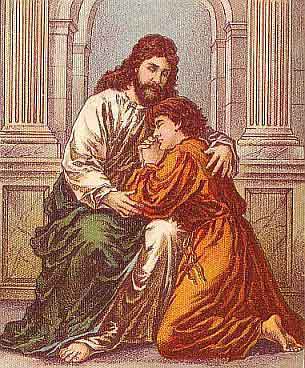
Prayer is a means of expressing our love to God. Prayer is for me. God doesn't need me to pray to him. I need me to pray to him. When we learn to pray, we sometimes forget that at the core of prayer is to practice remembering God. (1) I love this idea that prayer is practice. When we pray, our minds wander and sometimes it is normal to forget that we are praying. As I remember to be mindful of who I am praying to and his love for me, I learn to be more patient with my wandering mind and remember that it takes patience with myself to be able to pray.
An ancient prophet-king of the Book of Mormon, King Benjamin, entreated his people to always remember God:
"And again I say unto you as I have said before, that as ye have come to the knowledge of the glory of God...and have received a remission of your sins...even so I would that ye should always remember, and always retain in remembrance, the greatness of God, and your own nothingness, and his goodness and long-suffering towards you, unworthy creatures, and humble yourselves even in the depths of humility, calling on the name of the Lord daily, and standing steadfastly in the faith of that which is to come..."I've always liked this verse, and even still it is shocking to hear the phrase "unworthy creatures." Because this is a King who loved his people, and this is a righteous group of saints gathered around the temple to hear instruction on how to be better. Even this people needs the reminder of humility and the need to "call on the name of the Lord daily."
1. To pray is to practice remembering God in humility. It is for us to remember and feel the love he has for us as his children.
One of the things we try to do here, in church and in life, as mormons and christians, is to become like God. One of the ways to do so, is to try to submit our will to his. Prayer can help us to do this. As we pray, our lives can be filled with confidence that we are doing our best to follow God. (2) So how do we pray and what do we pray for? We are given examples of prayer from Jesus Christ. His disciples asked him how to pray and Jesus taught:
"When ye pray, say, Our Father which art in heaven, Hallowed be thy name. Thy kingdom come. Thy will be done in earth, as it is in heaven. Give us this day our daily bread. And forgive us our debts, as we forgive our debtors. And lead us not into temptation, but deliver us from evil: For thine is the kindgom and the power and the glory, for ever. Amen."At its simplest, we can break this prayer down into parts:
- We need to acknowledge our dependence on God and our submission to his will.
- We can ask for those things that we want. Alma, another prophet from the Book of Mormon gives us some insight into prayer and if you haven't read those verses in a while, I would invite you to do so.
- We need to ask for forgiveness for the things that we have done wrong. We need to acknowledge that we are messy and imperfect.
- We can plead for help. We can acknowledge that sin and temptation are real and that we need help to overcome them because we can't do it on our own.
- We can recognize God's sovereignty in our lives.
Equally important to the asking though, is to listen. (1) If we ask for things, we need to have instruction on how to act. We are taught that we should listen, but sometimes we don't talk about what that looks like. For some people it might be meditation, for others it may be a walk in nature or in an art museum. In whatever way listening works for you, it is important to take the time to listen to feelings and impressions that come and then act on them or write them down.
A caveat to this principle, is that it's imperative to remember that prayer and action will not secure blessings in the way that you or I think. There's a saying attributed to Brigham Young that says something like "Pray as if everything depends on the Lord. Act as if everything depends on you." (3) Although this is a nice thought, I believe it deludes us into thinking that we can secure the answers that we seek. Blessings will come according to the will of the Lord regardless of our actions. I think that's a hard thing to admit.
2. We pray so that we can acknowledge the will of God and try our best to get on the same page.
Finally though, I want to close with one of the harder aspects of prayer. This is one of those things that I have come up against in my own life and I've listened to a number of friends who have experienced this as well.
Sometimes when we pray, there is only silence. (4)
This silence is not unprecedented though. One of the stories from the Book of Mormon tells us about Enos, who one day prays to understand what his father has taught. Enos comes from a family where his father is the prophet who has a very active and responsive relationship with God. When Enos goes to pray he experiences something very different:
"And I will tell you of the wrestle which I had before God...And my soul hungered; and I kneeled down before my Maker, and I cried unto him in mighty prayer and supplication for mine own soul; and all the day long did I cry unto him; yea and when the night came I did still raise my voice high that it reached the heavens."Enos had to wait through a lot of silence until he came to the other side of it. When he did, there were answers and a confidence to pray for generation-altering-blessings such as a spreading of the gospel to his cousins that had not had the opportunity to hear it.
This silence also happened to Joseph Smith who in Liberty Jail said "O God, where art thou? And where is the pavillion that covereth thy hiding place?"
A final example is Jesus Christ, who at the end of his life cried out "My God, my God, why hast thou forsaken me?"
 This is the hardest part of prayer and where we have to exercise all the faith we have. So often we are taught that we just must have enough faith or enough action for our prayers to be answered. Or that maybe we don't know the will of the Lord, or that we have been sinful and so God will not speak to us. Maybe all of these things have a time and place. But also, maybe, silence can be an invitation for us to be with God. It can also mean that we are trusted to make a decision based off of the information that we already have. Silence is often taken as negligence, but maybe instead of feeling it as a sting and rebuke, we can accept it, wrestle with it and find God in it. (1) We have the agency to do so. I suspect that we will all at some point in our lives struggle with a silent God. Silent, but who still very much loves us and knows better than we do how to help us feel his love.
3. Sometimes when we pray there is silence. This gives us an opportunity to exercise faith.
I want to close by saying that I believe in God. I believe in revelation. I know that when I read the scriptures, I get insight into ways to be a better person that are not from me. I believe that God works through all of us, even though we are imperfect, to help us feel his love for us and for each other. I know that when I pray, I feel loved. I know that prayer will bring us closer to God.
------------------------------------------------------------------------------------
(1) I gathered the framework for some of my thoughts from the book "Letters to a Young Mormon" by Adam S. Miller. Such a thought provoking book. I highly recommend it.
(2) James Falconer wrote an article entitled "The Odd Thing: Prayer" which is a good reminder of why we pray.
(3) The article "The Grace of Nothingness" by George Handley says this much more eloquently than I can. Also good recommended reading.
(4) This was the first time in my life that someone openly talked about the silence of God in prayer. I am still awestruck at the beauty and vulnerability Miller used in talking about this.
*I read a few conference talks before I wrote this article. They were good, and addressed the Lord's prayer in many of them. I feel like for me, Miller's framework of starting with no assumptions of a prayer giver's background was more helpful in figuring out how to find the words to talk about some of the harder, but less addressed problems of prayer. (I can't recommend Miller's book enough.)


Comments